Questions for Your Alstonville Dentist
Our team at Daley Street Dental is always available to answer your questions and address your smile-related concerns. Below are some of the most common questions our patients have. If your question isn't answered here, we encourage you to contact our clinic so we can help you better understand your dental care.
Wisdom Tooth Removal
Yes, we do! We can provide in-chair or general anaesthetic services at a local day hospital for wisdom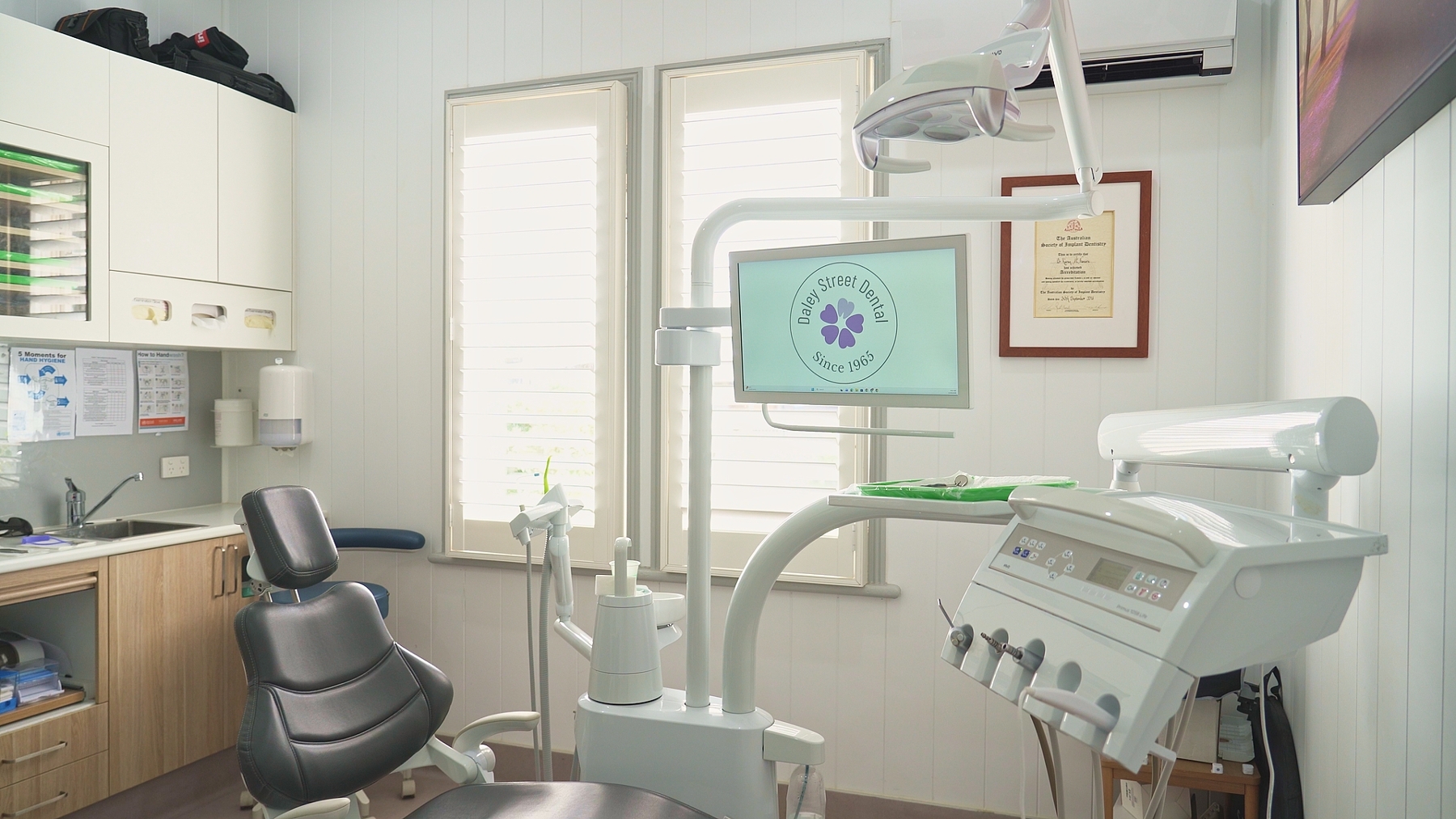 teeth extractions by Dr Kieran McNamara. He has had extensive training in Australia and overseas in oral surgery procedures.
Affordable Extractions in NSW
Wisdom teeth vary in difficulty, so we work with our patients to determine the most effective and budget-friendly option for their unique situation. If you would like to learn more about our financing, payment, and insurance options, we invite you to explore our financial page.
Sedation Options for Patients
To calm your nerves and numb the area in need of treatment, we provide the following forms of sedation:
- Nitrous oxide (‘happy gas’)
- Oral pre-medications (i.e., valium)
- ‘Twilight’ sleep dentistry
- General anaesthetic at a local hospital
Our wisdom tooth extractions are reliable and affordable, so you can get the treatment you need to maintain your oral health.
Ready to Resolve Tooth Pain?
Wisdom teeth can often cause pain and discomfort, and they can even sometimes lead to other oral health issues. We never recommend removing wisdom teeth unless they pose a threat to your health.
If you suspect you may need an extraction, we invite you to call us today to book your appointment with Dr McNamara.
Wisdom teeth are third molars located in the back of the mouth and are the last adult teeth to emerge. There are usually four wisdom teeth: two in the top of the mouth and two in the lower. However, not everyone has four wisdom teeth; some people have none, while others have only one or two.
Wisdom Tooth Removal in Alstonville, NSW
Not everyone will need their wisdom teeth removed. If you have enough room in your mouth to accommodate them and brush and floss them properly, you may not need them extracted.
Here are some of the reasons why our dentists might recommend wisdom tooth removal in Alstonville:
- Crowding — If there's not enough room for your wisdom teeth, they may be crowding and causing neighbouring teeth to shift.
- Cleanliness — Since wisdom teeth are at the back of your mouth, they are harder to brush and floss properly. If you can't keep them clean, you're more susceptible to developing problems like tooth decay and gum disease.
- Impaction — Wisdom teeth that remain impacted, or stuck beneath the gumline, can cause an infection.
- Damage — Wisdom teeth that arrive at odd angles could cause damage to neighbouring teeth.
Nervous About Wisdom Tooth Removal? Sleep Dentistry Is Available in Alstonville
If you're feeling nervous, fearful, or anxious about getting your wisdom teeth extracted, or your case is complex, your dentist in Alstonville has several options for sedation dentistry that can help you get your oral surgery as comfortably as possible.
Talk with our team on (02) 6422 8173 if you have questions about wisdom tooth extraction or sedation dentistry.
Wisdom teeth are formally called third molars because they emerge much later in life than other adult teeth.
Wisdom teeth were once essential for the early human diet of hard roots, nuts and meat. Today, humans cook food to soften it, and we can cut our food with utensils instead of using our wisdom teeth. Wisdom teeth are no longer essential, and we only remove them if they pose a health risk to a patient.
There are several reasons why someone may need a wisdom tooth removed. If a person experiences any of the following symptoms, a wisdom tooth extraction may be necessary:
- Pain, pressure or swelling at the back of the mouth
- A wisdom tooth that appears to be moving up and down but not coming through
- Difficulty opening the mouth due to infection
- Pain in the back of the mouth when closing the gums
- Bleeding and tenderness in the area when brushing
- Tooth misalignment or crowding
- Food packing in the area
There are many benefits to receiving a wisdom tooth evaluation, such as:
- If left untreated, periodic pericoronitis—the inflammation of gum tissue covering the wisdom tooth—can progress to dangerous facial infections and swelling, requiring hospital admission and intravenous antibiotics.
- Cysts, tumours or abscesses are also associated with wisdom teeth that have been left untreated for prolonged periods.
- Food packing and difficulty cleaning the area often leads to tooth decay. The decay usually affects the tooth in front of the wisdom tooth, and both teeth may require extraction simultaneously.
We use a strong, long-lasting local anaesthetic to ensure you are completely numb and relaxed during your procedure. The average treatment time for all four wisdom teeth is usually booked for one hour, but it usually takes 20-30 minutes from start to finish.
Once you are comfortable and the site is completely numb, the tooth or teeth will be uncovered and sectioned into smaller parts for gentle, predictable removal. Finally, the area will be closed with one or two stitches that will dissolve in about a week.
We have a comprehensive aftercare protocol that outlines the food to eat and those to avoid after the procedure. If you follow our advice and take the medication as instructed, the pain will rarely exceed 4/10
Yes. There are two options for sedation in Alstonville if you do not want to be awake for the procedure: 'twilight' sedation in the dental practice or general anaesthetic in a hospital setting. Both methods use the same anaesthetic medications, just a different dose.
Dr Kieran McNamara is the general dentist who will be removing your wisdom teeth. He specialises in wisdom teeth and difficult extractions, bone grafting, implants and All-On-4 ('teeth in a day') procedures. Dr McNamara sees the majority of his patients upon referral from fellow dentists, and he removes between 50-100 wisdom teeth every week.
No. You can get them taken out one at a time if you wish, but there are several advantages to getting them all done at once, including:
- Because there can be a ~3-5 day recovery that involves regular pain medications, mouth rinses and time off work, it's often preferable to choose to only go through this once in your lifetime.
- The recovery experience from four wisdom teeth extractions is more or less the same as the recovery from one wisdom tooth extraction.
- If you choose to undergo 'twilight' sedation or general anaesthetic, it is an added cost, and most people may prefer not to have to experience the procedure more than once. We feel so strongly about this that if we assess there is a tooth with pathology or at high risk of complications, we will refer you to an oral surgeon so you can have all four taken out at once.
No. We only take out wisdom teeth if there is an indication they should be removed. Some wisdom teeth do not need to be taken out at all, such as deeply impacted or submerged wisdom teeth that are not exposed to oral germs, and when there is enough room in the mouth for wisdom teeth to safely and fully erupt. This can sometimes occur when someone had extractions before they started braces
Absolutely! Although all dentists are trained to take out wisdom teeth at dental school, and most dentists take out teeth every day, some dentists prefer to develop their skills in other areas of dentistry and do not offer this service.
Dr McNamara has done further training in atraumatic wisdom tooth removal and assessing and diagnosing wisdom teeth with a high risk of complications or when pathology is present. In instances like this, it may be in your best interest to see an oral surgeon who is both a doctor and a dentist. They are trained to perform surgery on the head, neck and jaw in a hospital setting.
It means that something prevents the wisdom tooth from erupting into its normal position, and it becomes either fully or partially stuck under the gum and bone. It can be impacted on the tooth in front, the bone behind, or the gum around the tooth.
The further under the gum the tooth is located, the more deeply impacted it is. Although this is a common term and people imply it will make the extraction more difficult, other factors such as the tooth's angle, the curve of the roots and the patient's age play an equally significant role.
According to research, the safest time to have wisdom teeth removed is before they come through the gum, between ages 17-24. The roots are not fully formed during these ages, and there is less risk of them hooking or curving around important structures. In the US, it is a standard of care to have your wisdom teeth removed as a teenager before the roots are fully developed.
The longer wisdom teeth are left and the older the patient is, the more difficult wisdom teeth are to remove. Besides being more difficult to remove, you are also more at risk of cysts, tumours and pathology developing around the unerupted tooth, leading to bone resorption or fracture.
Over time, the pain and swelling symptoms associated with infections return every six weeks to three months. Each time these symptoms return, they tend to get worse. This can lead to dangerous facial infections and swelling, requiring hospital admission and intravenous antibiotics.
At Daley Street Dental in Alstonville, we can remove all four wisdom teeth for $1999 or charge $245-$483 per impacted wisdom tooth.
We offer Afterpay, Zip Pay and DentiCare. We also offer repayment plans for as little as $20 per week or with zero interest. Surcharges may apply that exceed the fixed price offer.
Yes, we accept all major health funds. Once you attend our complimentary consultation and we have reviewed your x-rays, we can give you the item numbers for each tooth so you can see what your health fund will cover. You can then calculate the remaining out-of-pocket gap, and the gap amount will depend upon your level of coverage and the difficulty of the impaction. The usual item numbers for wisdom tooth extractions are 311, 322, 323 and 324.
As a parent, it is often good to check when your son or daughter is no longer eligible under your policy. It's usually safer, easier, and more cost-effective to remove a dependent at an earlier age. The age that a dependent is eligible for coverage under most health funds is 24 or 25 years old.